Google keeps on evolving its algorithm continually to provide better search results and user experience. What might work for you today may not work next year but one thing that you can count on is your On-Page & Off-Page tactic. To be on the list of SEO experts, you should always keep your eyes on the latest search engine optimization updated for a successful SEO campaign.
What is the difference between On-Page & Off-Page search engine optimization and how it can help to get a higher ranking on the search engine result page in 2023? This is what we are going to learn today from this article.
What is On-Page SEO?
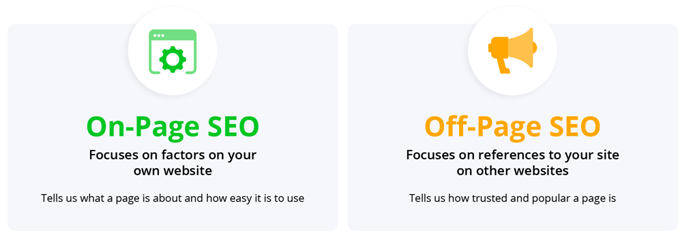
On-Page SEO is to optimize web pages internally by improving various factors like web page load time, title tags, web content, keywords, header tags, and more. This can improve web page ranking from bottom to top if done properly. Ultimately you can drive more organic and targeted traffic to the website. Let’s go through the top On-Page factors that Google values the most in 2023.
-
Title Tags:
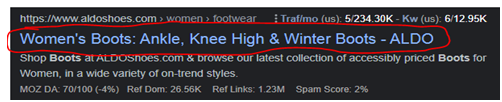
The title tag is one of the most important on-page points as it represents what your page is about. Title tags with relevant information and keywords can not only help users to know what your page is about but also help spiders to categorize your content accordingly. Ultimately you should have 60 characters in your title tag which includes space and always add your targeted keywords in it. The example of title tags is shown below.
-
URL Structure:
URL Structure: Google is all about user-friendliness. Before it was not important to have a user-friendly URL structure but now URL structure plays an important role in on-page SEO. You must have a URL structure that users can understand by looking at what this page is all about. The way to do so is by adding keywords in your URL and making it as short as possible so that your users can remember it easily.

-
Heading Tags:
As we discussed above Google has started paying the value for the user experience and header tags play an important role in it. Content is king in search marketing these header tags can improve your web page content user experience. Headers are designed to assure visitors that they have landed in right place and found what they are looking for. You should always have one H1 tag on a page. H2, H3, H4 can be used more than one time if required. Keep this in mind when you do on-page for your next on-page project.
-
Alt Tag:
Alt tag is a tag that we use for images on websites. This tag helps to describe the purpose of the image to Google, what it is about. This is not visible on the frontend like header tags, only visible to backend and Google bots (spiders). While creating Alt Tag make sure you use keywords in it. You can also add geolocation if required.
-
Page Load Speed:
Page load speed plays an important role in improving the user experience. No one likes waiting for 30 sec for a page to load. According to Google, a web page should have a page load speed between 2 to 3 seconds. Studies show that users will leave a webpage if it takes more than 3 seconds. You can use online tools to check your page load speed, PageSpeed Insights is the one which Google recommends to use.
Now, what is Off-Page SEO?
All the actions which are taken outside of the website to improve its organic ranking and reputation are known as Off-Page SEO. You don’t have much control over it. Here are some of the activities you can perform to boost your off-page SEO. This can be creating link building, social media, content marketing, and page authority. Let’s go through it one by one.
-
Link Building:
This is when you focus on getting links from other websites. This is can also be called backlinking. The more backlinks you have, the more likely you are going to rank high on the search engine result page. Some of the examples of link-building activities are social bookmarking, guest posting, classified ads & content creation. Make sure you are focusing on the quality of your backlink it should be from a website related to your same niche. Google prefers the quality of links rather than the number of links.
-
Social Media:
Social media does not have a direct impact on your ranking but yes it can indirectly help you to boost your website traffic. Platforms like Instagram, Facebook, Twitter, and more help you in brand awareness. People start connecting with your brand if you post content regularly on your social media fan page. This can help you to go viral hence you will end up gaining more audience.
-
Content Marketing:
This is one of the important points for off-page SEO. Content marketing is when you make valuable content for your audience aside from the content you are publishing on your website. You can do guest posting, surveys, create downloadable content which can be a PPT, PDF, Video, etc. This can help you to increase SERP ranking as well as increase traffic and generate leads.
-
Page Authority:
Page Authority (PA) is a score of the page which is between the range of 0 to 100. This score is developed by Moz which tells you how repudiated is your page on the internet what value does it have and every page has its own authority. The best way to improve PA is by improving link profiles. You can do that by getting do-follow links from other high authentic websites.
Conclusion: To rank high on SERP you should follow the above on-page and off-page tactics. Both are equally responsible for ranking keywords for a particular web page. Moreover, it is not one night result-oriented so you have to work consistently in order to realize the benefit of search engine optimization.
Published By: Amanveer Singh Pathania